Activated Charcoal Incense
Activated Charcoal Incense is not the same substance as that found in charcoal bricks or burned pieces of food. The manufacture of Activated Charcoal Incense makes it extremely absorbent, allowing it to bind to molecules, ions, or atoms and remove them from dissolved substances. Making Activated Charcoal Incense involves heating carbon-rich materials, such as wood, peat, coconut shells, or sawdust, to very high temperatures.

- Product Introduction
Company Profile
Puyang Hongyuan New Energy Technology Co., Ltd. is a production-oriented enterprise mainly engaged in the development of hookah charcoal, incense charcoal, barbecue charcoal, and new energy. As the industry leader, we have formulated strict product quality standards and precisely controlled every aspect of production in the company. We are committed to producing high-quality, stable, and more refined charcoal products.
Why Choose Us
Our Factory
Puyang Hongyuan is located in Puyang City, Henan Province, the origin of the first dragon in China, with a total area of 43,000 square meters, a total construction area of 21,000 square meters, and an annual output of more than 10,000 tons.
Advanced Equipment
We have introduced advanced equipment and facilities, implemented multi-dimensional quality control in all aspects of production, and carried out quality inspection and testing by grading and classification, and implemented the production policy of quality first and perfect details.
Our Certificate
ISO/CE certificate
Rich Experience
We build a strict quality management system, from ingredient selection to after-sales quality feedback. Repeat order proves the quality of our products.
We have strict production plan, perfect connection between packing and delivery, try our best to make sure the product reaches you as quickly as possible.
Related products

Place of Origin: Henan China
Shape: round
Ash Content: 6%
Time to Ignition: 30seconds

Diameter: 27mm, 33mm, 33mm with hole, 40mm, 50mm, 50mm with four holes
Raw material: Bamboo charcoal , fruit charcoal
Ash: Less than 3.5%

Charcoal is the best Eco-friendly product. It grows much faster than wood and provides higher calorie value, longer burning time, and save more energy.
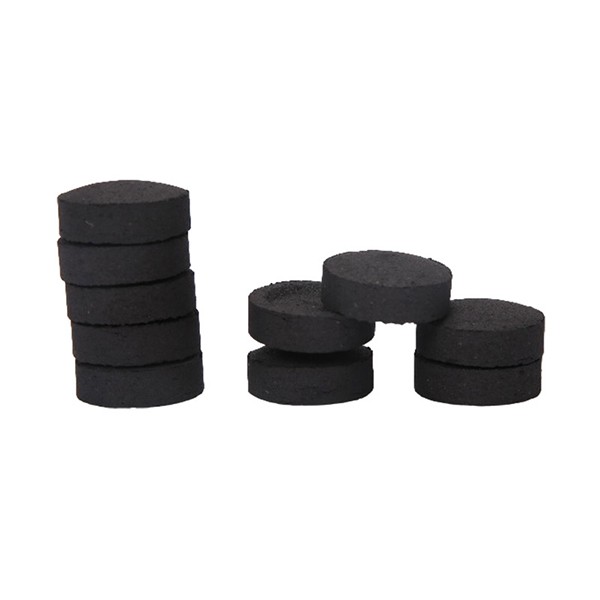
We has been engaged in industry more 25 years, and has rich experience in the industry, which can provide good quality and customized products for customers. Our products are mainly exported to many countries.
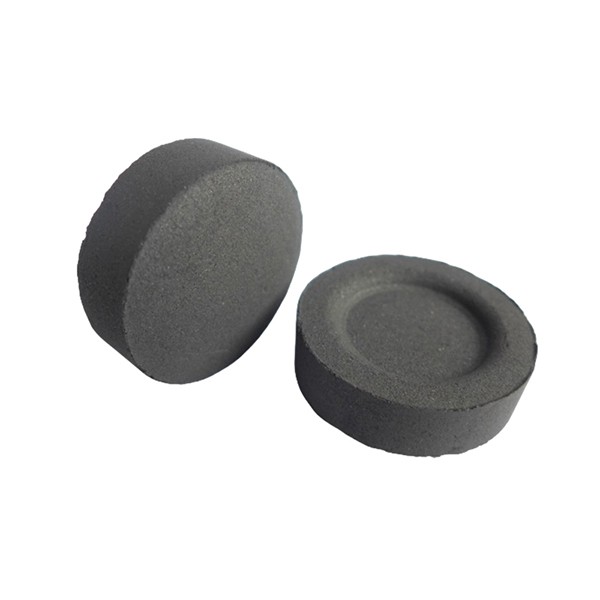
Items: Ashless charcoal
Diameter: 38mm
Weight/pcs: 12g
calorific value: 7200kcal-7600kcal
Ash content: less than 3%

Item: Value
Place of Origin: PUYANY China
Brand Name: Custom
Model Number: Different size

We are the manufacturer and wholesale bulk supplier of coconut shell charcoal briquettes for shisha & hookah in China.

Our factory is one of professional hookah/shisha charcoal factory, which is located in Puyang city, Henan province of China. Our company is specialized in shisha charcoal business for ten years, and we insist in participating in Canton Fair every year.

Medium (27mm) and Large (35mm) are easy, quick to light and create minimal smoke and sparks.
Each box contains 120 pieces (20 rolls of 6).
What is Activated Charcoal Incense?
Activated Charcoal Incense is not the same substance as that found in charcoal bricks or burned pieces of food.
The manufacture of Activated Charcoal Incense makes it extremely absorbent, allowing it to bind to molecules, ions, or atoms and remove them from dissolved substances.
Making Activated Charcoal Incense involves heating carbon-rich materials, such as wood, peat, coconut shells, or sawdust, to very high temperatures.
It is produced by heating charcoal to an extremely high temperature in an environment without oxygen, such as a tank.
Activated Charcoal Incense, or activated carbon, is a fine black powder. It is a porous material, meaning there are empty spaces or pores within the substance.
Benefits of Activated Charcoal Incense
Absorbent Nature
Activated charcoal is highly porous, which gives it exceptional absorption properties. This means it can effectively capture and neutralize airborne contaminants, odors, and even some gases, making it ideal for use in environments where air purification is desired.
Versatile Uses
Activated charcoal incense can be used in various settings, including homes, offices, meditation spaces, and even outdoors. Its purifying properties make it popular in wellness and therapeutic environments.
Eco-Friendly
Activated charcoal is a renewable resource, often derived from sustainable hardwoods. It is biodegradable and does not release harmful chemicals during the burning process, making it an environmentally friendly option.
Slow Burn
Activated charcoal incense burns slowly and evenly, which helps to disperse the scent gradually over a longer period, allowing for a more sustained fragrance experience.
Low Smoke
Unlike some traditional incense types, activated charcoal incense produces very little smoke, which makes it a healthier choice for indoor use and suitable for individuals sensitive to smoke.
Natural Ingredients
Activated charcoal incense is typically made with natural binders and fragrance oils, which can enhance the overall sensory experience and reduce exposure to synthetic chemicals.
Types of Activated Charcoal Incense
Granulated Activated Carbon
Granulated activated carbon has a smaller external surface than powdered activated carbon as a result of its slightly larger particle size. This type is mostly utilized in general deodorization, air treatment, and water treatment.
Pelletized Activated Carbon
This is powdered activated carbon that has been mixed with a binder and formed into pellets. The pellets are typically employed in gas phase applications because they have a low dust content, good mechanical strength, and a low-pressure drop.
Powdered Activated Carbon
This is a fine form of activated carbon, and it is typically added directly to process units like raw water intakes, gravity filters, and clarifiers. Due to the probable head loss that might happen, it is rarely utilized in a dedicated vessel.
Impregnated Activated Carbon
This form of activated carbon is infused with inorganic impregnates like silver and iodine. The biggest application for impregnated activated carbon is in the purification of domestic potable water.
Catalytic Activated Carbon
This fifth type of activated carbon is also called surface-modified activated carbon. In addition to being adsorptive, it may also initiate and enhance chemical processes, which makes it useful for removing contaminants from drinking water.
Activated Charcoal Incense has a complex, porous structure that is critical to its effectiveness as an adsorbent. Its surface area can range from 500 to 1500 square meters per gram, depending on the activation method and the source material. The pores and channels in Activated Charcoal Incense are of various sizes and shapes, ranging from micropores to macropores.
The micropores, which are less than 2 nanometers in diameter, provide the greatest surface area and are responsible for most of the adsorption. The mesopores, which are between 2 and 50 nanometers in diameter, contribute to the overall porosity of the material, while the macropores, which are greater than 50 nanometers in diameter, allow for faster flow rates.
The structure of Activated Charcoal Incense plays a critical role in its effectiveness as an adsorbent. Different pore sizes and shapes are required for different adsorbates, or substances that are adsorbed onto the surface of the Activated Charcoal Incense. For example, gases and small molecules are best adsorbed in micropores, while larger molecules are best adsorbed in mesopores and macropores. The pore size and shape also determine the rate at which the adsorption takes place.
In addition to its porous structure, Activated Charcoal Incense also has a high surface reactivity due to the presence of functional groups on its surface. These functional groups, such as hydroxyl and carboxyl groups, can interact with adsorbates through hydrogen bonding, van der Waals forces, and other interactions.
Applications of Activated Charcoal Incense
Activated Charcoal Incense has a wide range of applications in various industries due to its unique structure and adsorption properties. Some of the most common uses of Activated Charcoal Incense include:
Water and air purification
Activated Charcoal Incense is widely used in water and air purification systems to remove impurities and contaminants. Its high surface area and porosity allow it to adsorb a wide range of pollutants, such as organic compounds, heavy metals, and volatile organic compounds.
Food and beverage industry
Activated Charcoal Incense is used in the food and beverage industry as a colorant and a filtering agent. It is commonly used to remove impurities and contaminants from beverages such as beer and wine.
Cosmetics
Activated Charcoal Incense is a popular ingredient in skincare products due to its ability to absorb impurities and toxins from the skin. It is used in facial masks, cleansers, and exfoliators.
Environmental remediation
Activated Charcoal Incense is used in environmental remediation to remove pollutants from soil and groundwater. It can be used to adsorb contaminants such as hydrocarbons, pesticides, and herbicides.
Properties of Activated Charcoal Incense
When selecting an Activated Charcoal Incense for a particular application, a variety of characteristics should be considered:
Pore Structure
The pore structure of Activated Charcoal Incense varies and is largely a result of the source material and the method of production.The pore structure, in combination with attractive forces, is what allows adsorption to occur.
Adsorptive Properties
The absorptive properties of the Activated Charcoal Incense encompass several characteristics, including adsorptive capacity, the rate of adsorption, and the overall effectiveness of Activated Charcoal Incense.
Hardness/Abrasion
Hardness/abrasion is also a key factor in selection. Many applications will require the Activated Charcoal Incense to have a high particle strength and a resistance to attrition (the breakdown of material into fines). Activated Charcoal Incense produced from coconut shells has the highest hardness of Activated Charcoal Incenses.
Ash Content
The ash content of Activated Charcoal Incense is a measure of the inert, amorphous, inorganic, and unusable part of the material. The ash content will ideally be as low as possible, as the the quality of the Activated Charcoal Incense increases as ash content decreases.
Apparent Density
While apparent density will not affect the adsorption per unit weight, it will affect the adsorption per unit volume.
Moisture
Ideally, the amount of physical moisture contained within the Activated Charcoal Incense should fall within 3-6%.
How to Make Activated Charcoal Incense
The production process of Activated Charcoal Incense, or the activation of carbon, exists in two forms. A carbonaceous source, which can exist as coal, peat, or any organic carbonaceous material is carbonized, which means the pure carbon is extracted by a heating method known as pyrolysis. Once the material is carbonized, it needs to be oxidized, or treated with oxygen, either by exposure to CO2 or steam, or by an acid-base chemical treatment.
Carbonization
Carbonization is the process of taking a carbon-rich piece of material and converting it to pure carbon through heating. This heating process, called pyrolysis, comes from an ancient technique for making charcoal. Very dense carbonaceous material is used in the beginning, because the end result needs to be extra-porous for Activated Charcoal Incense purposes. Carbon-rich material is placed in a small (relative to the amount of material) furnace and cooked at extreme temperatures topping 2000 degrees Celsius. What remains is usually 20-30 percent of the beginning weight, and consists of mostly carbon and a small percentage of inorganic ash. This is very similar to "coking," a method of producing coke from charcoal, a type of carbon-based fuel.
Gas Treatment
The activizing of carbon can be done directly through heating in a chamber while gas is pumped in. This exposes it to oxygen for oxidization purposes. When oxidized, the active carbon is susceptible to adsorption, the process of surface bonding for chemicals-the very thing that makes Activated Charcoal Incense so good for filtering waste and toxic chemicals out of liquids and gases. For physical gas treatment, the carbonization pyrolysis process must take place in an inert environment at 600-900 degrees Celsius. Then, an oxygenated gas is pumped into the environment and heated between 900 and 1200 degrees Celsius, causing the oxygen to bond to the carbon's surface.
Chemical Treatment
In chemical treatment, the process is slightly different from the gas activization of carbon. For one, carbonization and chemical activation occur simultaneously. A bath of acid, base or other chemicals is prepared and the material submerged. The bath is then heated to temperatures of 450-900 degrees Celsius, much less than the heat needed for gas activation. The carbonaceous material is carbonized and then activated, all at a much quicker pace than gas activization. However, some heating processes cause trace elements from the bath to adsorb to the carbon, which can result in impure or ineffective active carbon.
Post Treatment Activated Charcoal Incense
Following oxidization, Activated Charcoal Incenses can be processed for many different kinds of uses, with several classifiably different properties. For instance, granular Activated Charcoal Incense (GAC) is a sand-like product with bigger grains than powdered Activated Charcoal Incense (PAC), and each are used for different applications. Other varieties include impregnated carbon, which includes different elements such as silver and iodine, and polymer-coated carbons.
Handling and storage
Activated Charcoal Incense is stable and can be stored for many years in its shipping container or package if protected from contaminating vapors and liquids. Activated Charcoal Incense deteriorates only by doing work; that is, by acting as a catalyst or adsorbing vapors, gases and dissolved substances. Because it is relatively pure carbon, it is resistant to most acids, alkalis, chemicals and corrosive substances. Repeated heating and cooling has little effect on its physical structure. In solvent recovery plants, the adsorbent has been subject to as many as 10,000 heating and cooling cycles with no appreciable breakdown of the granules or pellets.
The best grades of granular Activated Charcoal Incense are hard and abrasion resistant, but methods of handling that tend to grind the product should be avoided. In vapor treatment systems, a high-velocity or non-uniform airflow may cause movement of the particles and rapid wear or breakage of the granules, particularly if the top of the carbon bed is not held in place by a screen. Upward flow of fluid at high velocities during adsorption should be avoided, because it tends to lift the granules and causes channeling. The method of handling Activated Charcoal Incense must be suited to the exact character of the product being used. For example, a powder has different considerations in connection with its handling than does a granular material. Impregnated carbons generally have somewhat lower ignition points than non-impregnated carbons. There are exceptions to this, but one must give special attention to ignition points in connection with carbons, which have been impregnated or given other special treatments. Manufacturer product specification sheets and material safety data sheets (MSDS) information provide important details such as carbon ignition temperature.
For the purification of air in living and working spaces, the adsorbent should be reasonably dry. It is not sensitive to moisture, but if it is dripping wet, its capacity will be reduced. If it has become saturated, it can be dried in an oven at 200°-250° F. Wet Activated Charcoal Incense tends to corrode mild steel, aluminum and some other metals. For wet applications, stainless steel, monel nickel, plastic, glass or ceramics can be satisfactorily employed as container vessels. For most dry applications, ordinary steel, aluminum, plastic or paper are suitable container materials.
Our Factory
Puyang Hongyuan New Energy Technology Co., Ltd. is a production-oriented enterprise mainly engaged in the development of hookah charcoal, incense charcoal, barbecue charcoal, and new energy. As the industry leader, we have formulated strict product quality standards and precisely controlled every aspect of production in the company.


FAQ
Hot Tags: activated charcoal incense, China activated charcoal incense manufacturers, suppliers, factory, incense charcoal for reception areas, incense charcoal for sandalwood scented incense charcoal, incense charcoal for mace scented incense charcoal, incense charcoal for ylang ylang scented incense charcoal, incense charcoal for star anise scented incense charcoal, incense charcoal for bergamot scented incense charcoal