

Bbq Coal
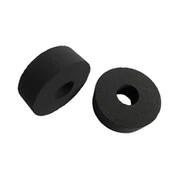
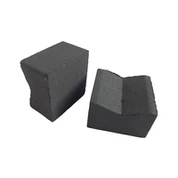
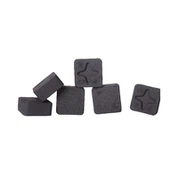
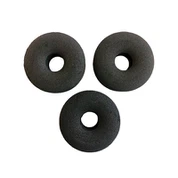
Bbq Coal have a pillow shape and are a composite fuel. They combine coal dust, accelerants, Bbq Coal fines, binders and an oxidising agent. The binder makes sure the Bbq Coal stay in their unique shape (it is usually a food-grade starch), and it also makes sure the briquette doesn't crumble. The oxidising agent ensures the briquette is easy to light. The rest is generally coal or Bbq Coal fines that are carbonised hardwood. Some Bbq Coal give off acrid-smelling smoke, so a chimney starter is recommended.

- Product Introduction
Company Profile
Puyang Hongyuan New Energy Technology Co., Ltd. is a production-oriented enterprise mainly engaged in the development of hookah charcoal, incense charcoal, barbecue charcoal, and new energy. As the industry leader, we have formulated strict product quality standards and precisely controlled every aspect of production in the company. We are committed to producing high-quality, stable, and more refined charcoal products.
Why Choose Us
Our Factory
Puyang Hongyuan is located in Puyang City, Henan Province, the origin of the first dragon in China, with a total area of 43,000 square meters, a total construction area of 21,000 square meters, and an annual output of more than 10,000 tons.
Advanced Equipment
We have introduced advanced equipment and facilities, implemented multi-dimensional quality control in all aspects of production, and carried out quality inspection and testing by grading and classification, and implemented the production policy of quality first and perfect details.
Our Certificate
ISO/CE certificate
Rich Experience
We build a strict quality management system, from ingredient selection to after-sales quality feedback. Repeat order proves the quality of our products.
We have strict production plan, perfect connection between packing and delivery, try our best to make sure the product reaches you as quickly as possible.
Related products

Specification For barbecue coal brick
High heating value
Smokeless
Energy saving and environmental protection


Function: Burning
Logo: Support customization
Custom Size: Support customization

Our charcoal burns extremely hot, with over 7800 cal/g of cooking power, is clean, smoke-free, Pure White Ashes and ZERO SPARKS. Our pieces is amazing quality and perfect for BBQ, Restaurants, Grills and Retail Stores.

Item: Charcoal briquettes on bbq
Ash Content: Less than 3.8%
Raw Material: Fruit wood, coconut shell
Size: 40*100/200/400mm

Machine-made Charcoal
High Quality Sawdust Briquette Charcoal
100% Sawdust as raw material. No chemical content.
Highly Carbonized Charcoal

Bamboo charcoal made from natural bamboo sawdust, the stick and square shape formed under high pressure, no additive or binding agent need during production, carbonized in high temperate Kiln, high quality, pure natural, no chemical, no toxin, Ideal and perfect for shisha smoking and BBQ.

Great news for sawdust charcoal briquettes, We are happy to bring you our top-quality sawdust charcoal briquettes that are sure to enhance your grilling experience. Our company has two big factories that can produce up to 600 tons per month capacity of long-shaped, smokeless, and organic natural charcoal briquettes.

Perfect for BBQ, cooking, grill, heating, furnace, burner, industry, restaurant etc.
Pure natural, no chemical, no toxic gases, no toxic residue, eco -friendly, long burning, clear burning, low white ash, tasteless, smokeless, no smell, no odor.
What is Bbq Coal?
Bbq Coal have a pillow shape and are a composite fuel. They combine coal dust, accelerants, Bbq Coal fines, binders and an oxidising agent. The binder makes sure the Bbq Coal stay in their unique shape (it is usually a food-grade starch), and it also makes sure the briquette doesn't crumble. The oxidising agent ensures the briquette is easy to light. The rest is generally coal or Bbq Coal fines that are carbonised hardwood. Some Bbq Coal give off acrid-smelling smoke, so a chimney starter is recommended.
On the other hand, Bbq Coal burns hotter and adds more flavour to your food. Therefore, lump Bbq Coal is recommended for hot and fast cooking, such as grilling wings with a closed lid, direct grilling, and rotisserie cooking. Its ability to impart significant flavour to meat and vegetables is a great option for enhancing your dishes.
Benefits of Bbq Coal
High Heat: BBQ coal provides a high level of heat, which is essential for searing meats and achieving a good char on the exterior while keeping the inside moist and tender.
Long-Lasting: Quality lump charcoal can burn for several hours, which is ideal for slow cooking or smoking meat over low and steady heat.
Easy to Light: Many brands of BBQ coal are treated with a self-lighting agent or come in easy-light varieties, simplifying the process of starting a fire.
Minimal Smoke: Good quality charcoal burns with minimal smoke, which means it won't impart an off-flavor to your food and is better for maintaining a clear cooking environment.
Versatility: Charcoal can be used in various grills, smokers, and even portable barbecues, offering flexibility in cooking setups.
No Flare-Ups: Charcoal grills tend to have fewer flare-ups compared to gas grills, which can happen when fat drips onto the flame. This reduces the risk of burnt food and singed taste.
Environmentally Friendly: Charcoal is a renewable resource, and when sourced responsibly, it can be a more sustainable option than some other fuels.
Types of Bbq Coal
Lump Charcoal
Lump charcoal is often thought of being superior to briquettes, but since it's difficult to package and hard to control the outcome of the lump shapes, it's not the most sought after.
These burn quicker and at a higher temperature than briquettes, but may also burn out faster as a result.
Since lump charcoal responds to oxygen extraordinarily well, you can manipulate the vents on your charcoal grill to actually control the temperature range in a short amount of time.
Wood Chips
Wood pellets are little wood discs that could be added in a barbecue to provide smoky flavor to food while it's being cooked. These pellets are available in different flavors, like mesquite or hickory, to add more depth of flavor in your food.
Wood chips comprised little fragments of wood that are chopped or divided into smaller pieces by cutting or splitting them. They're typically used as kindling for fires, but they also have a variety of other uses such as smoking meat, making mulch and even making paper.
Wood Chips contain 100% kiln dried wood sawdust that is crushed under high pressure into a hard block without any chemicals added.
Hardwood Briquettes
These are also made in the shape and fashion of briquettes, but hardwood tends to burn slower.
It's a denser type of wood, which means the heat moves through it slowly.
Since they burn for longer, it's a viable option if you don't want to constantly refill your charcoal chimney, or you're trying to have an all-day grilling affair and want to actually get a chance to socialize as well.
Binchotan
Binchotan has been around for hundreds of years, and they're made during an extremely slow process that can take weeks on end.
Traditionally, they're made from Japanese oak trees, but that's not the only reason they're unique.
In these kilns, it can take one to three weeks on a very, very low temperature to actually reach the right consistency.
Charcoal Briquettes
These are made in low oxygen environments, just like most charcoal, but they can be left to burn for days at a time until they're just right.
Briquettes can be purchase in large-scale volume bags, and remain among the cheapest ways to use your charcoal grill today.
Making briquettes on your own is a very difficult feat, but one that can be achieved.
Bamboo Lump Charcoal
Compressed bamboo sticks are used to make bamboo lump charcoal. It has a pleasant, sweet flavor and burns hotter than hardwood lump charcoal.
Bamboo lump charcoal is created entirely of natural resources such as bamboo, peanut shell, and other plants. The raw material is heated to 1000 degrees Celsius, then cooled and crushed by a high-tech equipment, resulting in a clean and environmentally friendly product. Potassium, sodium, calcium, and magnesium are all abundant in this substance.
Firstly it's important to note that the volume ratio of charcoal Briquette to Lump is about 1:1.5kg. So in terms of heat output and burn time you'd need 1 1/2 amount of lump to get the equivalent performance from a compressed briquette charcoal product.
So with that out of the way, the rule of thumb is that the ratio of BBQ charcoal to meat that you need is 1:1. So for every kilogram of meat, you will need a kilogram of briquette charcoal or 1.5 kilograms of hardwood lump.
In saying that, we've been able to cook 10kg of meat, staggered over an afternoon using about half a box of our Briquettes (about 5kg) due to the fact we knew we could get 5 hours burn time. So it's good to figure out if you're cooking it all in one hit, or staggered over time.
In any open type of BBQ application e.g. direct grilling, rotisseries, skewers or churrasco, most lump charcoal products will give you 2-3 hours burn time whereas briquettes will push out to 4-5 hours. Of course, this depends on the quality of fuel being used. The more binders and additives in a product the less of the raw material in the log/briquette/bead so burn time could be lower.
For those who like to mix briquette and lump, assuming the mix is half-half, you should expect burn time of somewhere in the middle approximately 3.5 – 4 hours.
So lump charcoal should burn for 4-6 hours versus your briquettes giving you a good 8-10 hours. Of course, every BBQ is different and these burn times are dependent on your fire management and ultimately how well you can control the airflow.
More oxygen = higher heat. Less oxygen means lower overall temperature therefore prolonged burn time. Although no oxygen can mean that your charcoal can fizzle out and lose heat altogether.
Uses of Bbq Coal
As a grill master, you know that using the right charcoal is essential for achieving that perfect smoky flavor in your grilled dishes. Bbq Coal is specifically designed for grilling and offers a range of uses that can enhance your outdoor cooking experience. Let's explore some of the key uses of Bbq Coal:
Grilling
The primary use of Bbq Coal is, of course, grilling. Whether you're cooking burgers, steaks, chicken, or vegetables, Bbq Coal provides high heat and a consistent burn, ensuring that your food is cooked to perfection. The natural flavor and aroma from the charcoal infuse into your dishes, adding that irresistible smoky taste.
Smoking
Bbq Coal can also be used for smoking your favorite meats. By adding wood chips or chunks to the charcoal, you can create a smoke-infused environment, resulting in tender and flavorful smoked meats. From brisket to ribs, smoking with Bbq Coal adds that extra depth of flavor that will have your guests coming back for more.
Outdoor Cooking
Bbq Coal is not limited to just grilling and smoking. It can also be used for other outdoor cooking methods such as Dutch oven cooking, campfire cooking, and even pizza ovens. The versatility of Bbq Coal allows you to explore different cooking techniques and expand your culinary skills beyond the grill.
When you're choosing which type of grill is right for you, it's important to have a sense of which one suits your needs and cooking setup best. Here is a list of the main differences between Bbq Coal and gas grilling.
Cooking temperatures: Bbq Coal grills are typically capable of wider temperature ranges and can reach temperatures up to 1200 degrees Fahrenheit. Most propane gas grills only reach 600 degrees Fahrenheit. There are gas grills that are capable of reaching very high temperatures but these are typically more expensive than regular gas grills. However, temperature control is much easier using a propane grill.
Flavors: A Bbq Coal grill will give your food a smoky flavor, while a gas grill will cook your food with a cleaner flavor. If you want the smoke flavor of a Bbq Coal grill with a gas grill, you can invest in a smoke box to infuse your food with a smoky taste.
Price: A Bbq Coal grill is typically more affordable than a gas grill. On the other hand, the fuel cost of heating a Bbq Coal grill can end up being more expensive than heating a propane gas grill. It's easy to burn through Bbq Coal fuel far quicker than you would use up the contents of a propane tank.
Heat-up time: A gas grill heats up much faster than a Bbq Coal grill, which needs time for the coals to build up heat. Gas grills are the better option for people who want to grill food quickly.
Heat distribution: Gas grills can be more versatile because you have greater control of how heat is distributed over the different parts of the cooking grate. It is more difficult to control the heat levels in a Bbq Coal grill than in a gas grill.
Environmental impact: Gas grills are more environmentally friendly than Bbq Coal grills, which produce lots of waste in the Bbq Coal ash as well as fumes.
Process of Formation of Bbq Coal
Bbq Coal formed under somewhat more moderate conditions are called bituminous Bbq Coals. These Bbq Coals are found in flat or gently sloping seams, indicating that the strong geologic pressures operative in the formation of anthracite were not operative during formation of bituminous Bbq Coal. Bbq Coals formed under the least severe conditions are called sub-bituminous Bbq Coal. Bbq Coals formed under the least severe conditions are called sub-bituminous Bbq Coals.
First Stage – Peat
This is the first stage in the formation of Bbq Coal. It is an organic substance which is formed due to the partial decomposition of dead matter. The partial decomposition is due to the accumulation of the matter underwater which cuts off the oxygen supply.
Second Stage – Lignite
This is the second stage in the Bbq Coal formation. It is a dark brown matter formed due to the pressure exerted by the sediments overlying the organic matter. It consists of traces of plants
Third Stage – Bituminous Bbq Coal
This is the third stage in the formation of Bbq Coal. It is formed due to the added pressure. This is also called as soft Bbq Coal.
Fourth Stage – Anthracite Bbq Coal
This is the fourth stage in the Bbq Coal formation. It is formed due to the high pressure and high temperature for a long period of time. It is hard, lustrous and has the highest percentage of carbon among peat, lignite, bituminous and anthracite. This is also called as hard Bbq Coal.
How To Store Bbq Coal
Storing Bbq Coal properly is crucial for ensuring its longevity and usability. Whether you use Bbq Coal for cooking, heating, or any other purpose, proper storage techniques are essential to maintain its quality and effectiveness. In this article, we will delve into the various aspects of Bbq Coal storage, including safety precautions, storage options, choosing the right containers, handling and transportation, long-term storage tips, and maintenance.
Bbq Coal is highly susceptible to moisture, which can lead to deterioration, spoilage, and the formation of mold and fungus. Additionally, exposure to air and sunlight can cause the Bbq Coal to lose its combustibility over time.
Furthermore, it is important to note that improperly stored Bbq Coal can pose serious health and safety risks. The release of Bbq Coal dust particles into the air can lead to respiratory issues and other health complications. Moreover, the spontaneous combustion of Bbq Coal in confined spaces can result in fires and explosions.
With these factors in mind, we must take appropriate measures to ensure the safe and proper storage of Bbq Coal. In the following sections, we will explore the necessary precautions and techniques for storing Bbq Coal both indoors and outdoors, along with guidelines for selecting the most suitable containers for storage.
Moreover, we will provide insights into the proper handling and transportation of Bbq Coal to minimize the risk of accidents or damage to the stored Bbq Coal. Additionally, we will share tips for long-term storage, which will be particularly beneficial if you plan to store Bbq Coal for an extended period.
Our Factory
Puyang Hongyuan New Energy Technology Co., Ltd. is a production-oriented enterprise mainly engaged in the development of hookah charcoal, incense charcoal, barbecue charcoal, and new energy. As the industry leader, we have formulated strict product quality standards and precisely controlled every aspect of production in the company.


FAQ
Hot Tags: bbq coal, China bbq coal manufacturers, suppliers, factory, Barbecue Charcoal, barbecue charcoal for steamed meat, barbecue charcoal for restaurant, barbecue charcoal for water smoker, barbecue charcoal for drum smoker, Square Charcoal