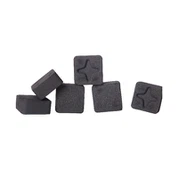
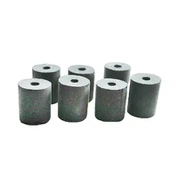
Large Charcoal Briquettes
Large Charcoal Briquettes is created by burning wood without any oxygen. Lump charcoal is the product of the process in its purest form—pieces of wood burned into carbon.Charcoal briquettes are manufactured by machines that press the material together. Unlike the pure hardwood lump charcoal, the briquettes contain several additives that help them light and burn consistently.Most briquettes are compressed tightly from various materials such as coal dust, borax, sawdust, wax, chaff and more. Create briquettes made of pure wood, free of any filler compounds. That makes them both healthier and chemical-free, but also safe for ceramic grills.

- Product Introduction
Puyang Hongyuan New Energy Technology Co., Ltd
Puyang Hongyuan is located in Puyang City, Henan Province, the origin of the first dragon in China, with a total area of 43,000 square meters, a total construction area of 21,000 square meters, and an annual output of more than 10,000 tons. We have introduced advanced equipment and facilities, implemented multi-dimensional quality control in all aspects of production, and carried out quality inspection and testing by grading and classification, and implemented the production policy of quality first and perfect details.
Why Choose Us
Our Product
We are specialized in various types of hookah charcoal, incense charcoal, barbecue charcoal, Instant-light charcoal and research and development of new product.
Production Market
Our cooperative customers are located in more than 60 countries and regions in Asia, Europe, Australia, North and South America, and Africa. As a leading enterprise in the industry, it has participated in the strategy of the World Halal Industry Forum, the United Arab Emirates Exhibition and the Canton Fair, the Yiwu Fair held in China, and other large-scale international exhibitions and exhibitions, and has been well received by domestic and foreign customers.
Certifications
Our company has strong technical force, professional talent team, high-quality management team, and has obtained nearly 20 patents, and has passed ISO9001 international quality system certification. Since its establishment, the company has been rated as a high-tech enterprise by the provincial government, and will continue to apply for specialized, special, and new-type enterprises, and move forward gradually for further development.
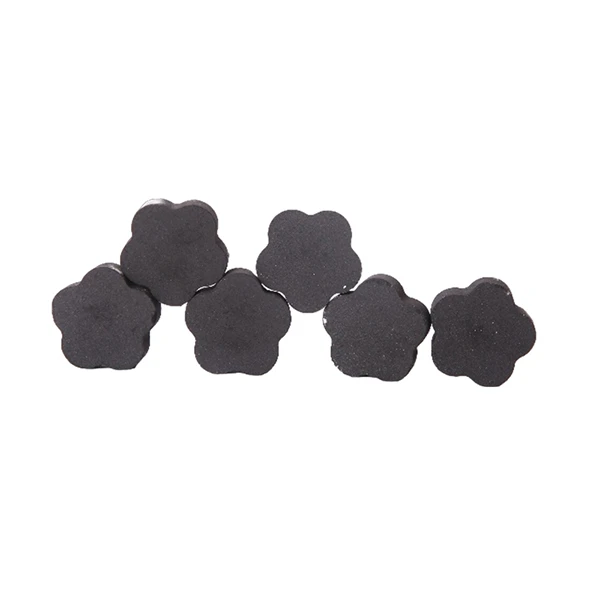
In modern day markets, quality has become a major economic factor. Customers not only require a fast and efficient delivery of data, but also 100% accuracy of the data provided.

Function: Burning
Logo: Support customization
Custom Size: Support customization

Square charcoal is made from coconut shell. It is used for shisha/hookah/arguile smoking. There are some shapes and sizes.
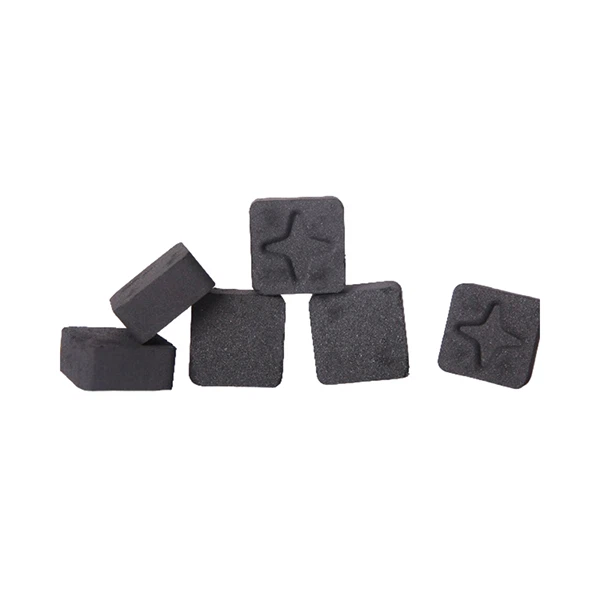
Any types of agroforestry waster and forest waste can be used for make briquettes, such as maize talks, soybean stalks,broomcorn stalks, cotton talks, rape stalks, peanut plants, sunflower stalks, bamboo sawdust.

Pure natural, no chemical, no toxic gases, no toxic residue, eco -friendly, long burning, clear burning, low white ash, tasteless, smokeless, no smell, no odor.

Bamboo charcoal made from natural bamboo sawdust, the stick and square shape formed under high pressure, no additive or binding agent need during production.

Specification For barbecue coal brick
High heating value
Smokeless
Energy saving and environmental protection
Low ash content
Raw material: Orange Wood
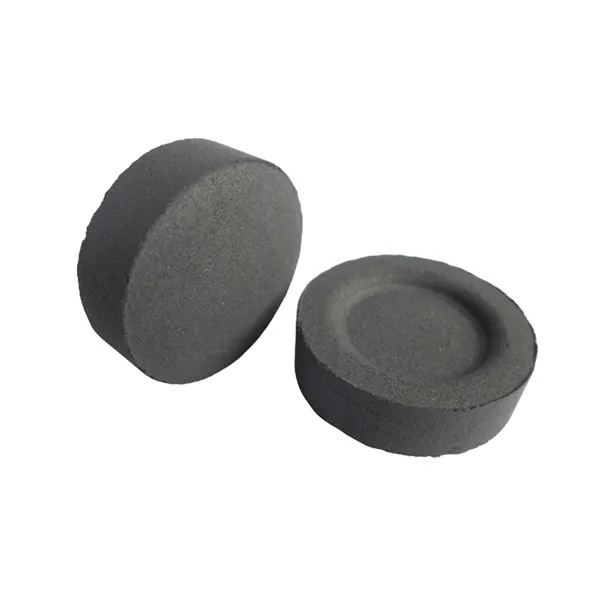
Item: Value
Place of Origin: China
Brand Name: Best charcoal barbecue
Model Number: Barbecue charcoal
Material: COCONUT SHELL
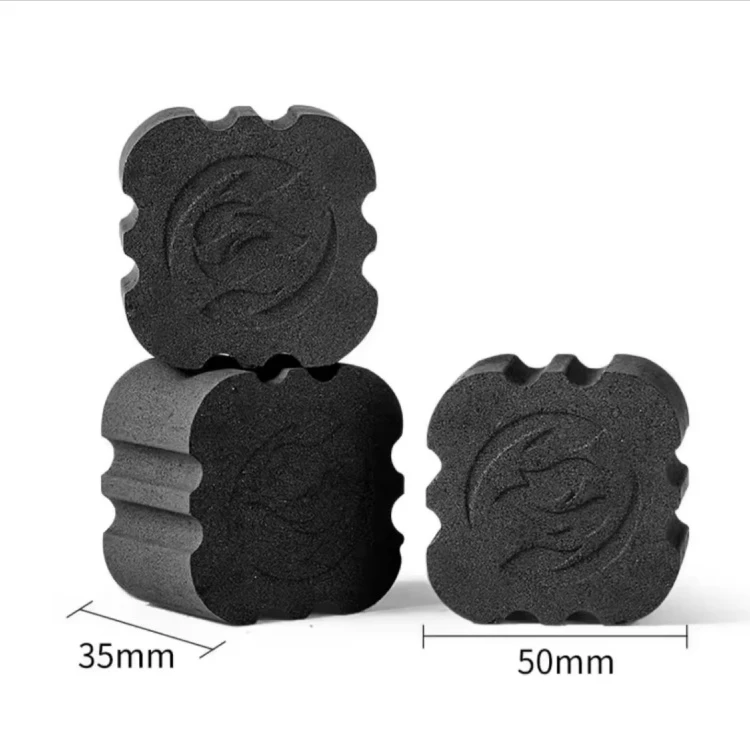
Cubic Quick Light Bbq Charcoal
Main Raw Materials: The Cubic Quick light bbq charcoal is made from natural fruit charcoal powder and corn starch adhesive. The use of natural materials and a biodegradable adhesive like corn starch suggests a focus on sustainability and reduced environmental impact.
What is Large Charcoal Briquettes
Large Charcoal Briquettes is created by burning wood without any oxygen. Lump charcoal is the product of the process in its purest form-pieces of wood burned into carbon.Charcoal briquettes are manufactured by machines that press the material together. Unlike the pure hardwood lump charcoal, the briquettes contain several additives that help them light and burn consistently.Most briquettes are compressed tightly from various materials such as coal dust, borax, sawdust, wax, chaff and more. Create briquettes made of pure wood, free of any filler compounds. That makes them both healthier and chemical-free, but also safe for ceramic grills.
Advantages of Large Charcoal Briquettes
Natural and pure: Charcoal briquettes is made from chunks of hardwood that have been burned in the absence of oxygen. It contains no additives, chemicals, or fillers, making it a natural and pure option for grilling enthusiasts who value simplicity and authenticity.
Intense heat: Charcoal briquettes has the advantage of producing high heat levels quickly. The irregular shapes and sizes of the charred wood pieces allow for better airflow, resulting in hotter flames. This makes lump charcoal an excellent choice for searing steaks or achieving that perfect crust on grilled meats.
Minimal ash production: Charcoal briquettes leaves behind less ash compared to briquettes since it doesn't contain binders or fillers. This means less cleaning and maintenance required for your grill or smoker.
Easy ignition: Charcoal briquettes are generally easier to light compared to lump charcoal. They are often pre-soaked with lighter fluid or contain additives that promote quick and hassle-free ignition. This convenience can be especially useful when you want to start grilling without much delay.
Process of Making Large Charcoal Briquettes
Step 1: Carbonization
Firstly, fire the raw materials in a rotary kiln. During the one-week combustion process, the temperature needs to be maintained at approximately 840-950℉ (450-510℃).
After the end of combustion, close the air inlet, and after one to two hours of exhaust, close the exhaust hole. After a two-week cooling period, empty the kiln and crush the carbonized wood (charcoal).
Step 2: Crushing
Use a hammer crusher or roller crusher to crush the carbonized wood. Although different types of wood such as bark, dry wood chips, and wet wood should be crushed to different sizes, generally they can be crushed into pieces of charcoal to 5mm below to make high-quality charcoal briquettes.
Step 3: Drying
Then a drying process is needed. If the water content exceeds the empirical upper limit, the temperature will rise and the volume will expand suddenly, which is easy to cause an explosion. If the moisture content is too low, it will be difficult to mold. Use a dryer to reduce its moisture content to the level required for briquette formation by about half (to about 15%).
Step 4: Briquetting
Briquetting is a key step in charcoal molding. After the raw materials enter the ball press, they will be subjected to three kinds of forces, namely the main driving force of the briquette machine, the friction force, and the centripetal force of the wall.
Due to moisture, adhesives, temperature (about 105℉or 40℃), and pressure of the rollers of the briquetting machine, the charcoal briquettes can maintain their shape when they fall from the bottom of the machine.
Step 5: Drying
Feed the charcoal briquettes into the dryer for about three to four hours to heat them to 275℉(135℃) and reduce the moisture to about 5%.
Types of Large Charcoal Briquettes


Briquettes
Briquettes are a type of charcoal that is very economical and widely available. They're affordable, simple to light, and reliable to cook.
Smoking chunks have a softer Smokey flavor than lump charcoal, and wood chips that usually used to smoke meat with it. Slow burning hardwoods like hickory or oak are used to make these pieces, which have a softer smoke flavor.
Frequently used Charcoal briquettes are made by crushing charcoal with binders and other substances like starch and limestone in regular shapes and sizes. Because of essences used in production, it will feel like petroleum odor at first light. Briquettes take a little longer to light than lump charcoal, However they flame more evenly.
Charcoal briquettes are a well-known type of charcoal used for cooking because they burn slowly and smoothly, are simple to light, and are available almost anywhere. They're made with a mix of coal, coal dust and a variety of other substances that help the coals burn longer. Briquettes come in range of flavors, allowing you to add wood smoke flavor to your food if desired.
Lump Charcoal
Lump charcoal is created entirely of wood and has no additives. The wood char, or turns into carbon, when burnt in an oxygen free environment. Lump charcoal burns hotter and faster than briquettes, but it has a more smoky taste. Finding a product that doesn't utilize any chemicals or fillers can be difficult.
Lump charcoal is made by burning wood wastes (mostly hardwoods) in a low-oxygen environment, removing all water, sap, and other impurities. It has no chemicals or tastes because it is a 100 percent natural product.
Because lump charcoal burns incredibly hot and quickly, you'll need to keep adding more as your barbecue progresses. Lump charcoal exists in a variety of sizes and shapes, however bags of lumps may contain some tiny fragments and dust. As a result, it takes more time to ignite than briquettes or hardwood, and when extinguished, it can leave some ash behind.
Natural Lump Charcoal
Natural lump charcoal is made up of fine hardwood that hasn't been exposed to oxygen during the burning process. With no additions or fillers, the finished product resembles bits of black rock. Lump charcoal burns faster and at higher temperatures than briquettes, although it is usually more expensive. However, because you may reuse coals by spreading it out to cool after cooking, natural lump is an excellent alternative for several cooking techniques.
Natural lump charcoal begins as complete logs that are charred embers after being burnt in an oxygen-depleted kiln. As a result, the heating fuel is more pure than that contained in charcoal briquettes. Because lump charcoal comes in fairly uniform sizes, calculating how much you'll need for your grill is simple. It requires about 20 minutes to start a chimney, so once all of lumps are covered with grey ash, it's ready to cook. Depending on the conditions, a maximum load of lumps charcoal will burn for roughly 45 minutes until needing to be refilled. If it's windy or cold outside, you'll burn through it quicker than if you're grilling on a calm day.
Hardwood Lump Charcoal
Hardwood lump charcoal is created entirely of hardwood logs, with no fillers or additives. This sort of charcoal produces a hotter flame. Other types of coal, like briquettes or charcoal logs, burn hotter and for longer.
Grilling with hardwood lump charcoal is a great idea because it burns cleanly and doesn't include any artificial ingredients or petroleum products. When you're done cooking, it also produces very little ash.
Because hardwood lump charcoal is free of chemicals and additives, it will not produce any disagreeable tastes when cooked with. This makes it an excellent choice for cooking fish on the barbecue, where aromas and flavors are easily detected.
Composition of Large Charcoal Briquettes
Charcoal accounts for more than 70% of the entire charcoal briquettes. As the combustion material providing heat, the raw materials for charcoal can be various woods, such as beech, birch, hard maple, pecan and oak.
The charcoal is mainly processed by the kiln. In general, the charcoal produced and extinguished in the kiln is called black wood charcoal. It has the advantage of being easy to ignite, but it is easy to explode during burning with a short burning time and much smoke.
The charcoal briquette cannot fully contact with oxygen during the combustion process, so the accelerator is needed to accelerate the combustion. The most suitable accelerator is the nitrate, which can not only provide oxygen to accelerate combustion but also heat during combustion.
However, it is too expensive. As an excellent accelerator with lower cost, 10% -20% of sawdust can be added to effectively increase the burning speed.
As one of the minor ingredients, white ash accounts for only 2% -3% of the charcoal briquette. But it plays a very important role in the burning process of charcoal briquettes.
By observing the degree of turning white, we can judge the burning degree of the charcoal briquette. In addition, because the white ash is not combustible, it can effectively extend the burning time.
Due to the lack of plasticity, the binder needs to be added in the process of charcoal briquettes. The proportion of binder in the charcoal briquettes is about 5% - 7%.
Numerous facts show that starch has the best performance as a binding material. After it's gelatinized, a thick paste can be formed so that the charcoal powder is stuck together to facilitate the later briquette.
Another popular briquette binder is arabic gum or acacia gum. However, considering the cost, the best choice is the waste paper pulp.
Application of Large Charcoal Briquettes

Industrial
Used for smelting high quality non-ferrous metals and cast iron.
Used as carburizing agent for mechanical parts to improve the hardness and wear resistance of the steel.
Make gunpowder withnitrate of potash and sulphur.
Charcoal can also be made into graphite. Graphite is a kind of solid lubricant and it is very important for rotational parts which cannot use lubricating oil.
Make graphite electrode.
If make charcoal products into activated charcoal, its application will be largely extended including chemical, pharmaceutical, environmental protection etc.
Making charcoal briquettes from corn stalk and rice straw, the iodine content of finished charcoal can reach 500mg/g which is closed to industry index of activated charcoal. Use these charcoal for pollution control can greatly reduce cost.
Food Industry
Used as food additives, food brewing, fumigate tea, deodorant and for decoloring and refining sucrose, glucose, xylose, ribose, maltose, lactose and other sugars. It can also be used for food preservation.
Pharmaceuticals industry
Charcoal can be used for destaining, purificating and refining chemical reagent and biological pharmaceutical materials.
Environmental Protection, Construction and Ceramics
Be used as snow removing agent and drying agent in environmental protection field.
Be used as building concrete special filler, insulating material, refractory material etc.
When firing ceramic, using charcoal briquettes can improve the quality of ceramic products.
Animal Husbandry
Use charcoal as feed additives to accelerate the growth of livestock and improve their digestion and disease resistance. Charcoal products are also good deodorizer for animal husbandry.


Everyday Life
People often use charcoal for heating, barbecue or warming. Since charcoal briquettes are smokeless, high in calories, charcoal is getting more and more popular in our everyday life.
There are numerous vertical and horizontal holes in charcoal briquettes. These holes can absorb various materials. So people can use it ad desiccant. When the climate is dry, charcoal can also emit the humidity it absorbed before. This is why charcoal plays an important role in regulating humidity. In addition, charcoal can also eliminate odor and harmful substances in room.
Wood charcoal can also improve soil permeability and drainage, and then provide a good living space for microbe which is benefit for plant. Put 5%-10% bean size of charcoal into soil when planting can help the plants grow better and improve their pest resistance.
Agriculture Industrial
Improve the soil temperature
Improve soilenvironment
Maintain soil moisture
Pesticide or fertilizer slow-release agent
Improve soil pH value, increase the content of soil C02, absorb harmful metal and increase microbial activity.
It's important to note when it comes to storing charcoal briquettes, its critical to keep it away from any form of moisture. Leaving your charcoal outside and unprotected will expose it to humidity, fog, and dew. This can lead to making it nearly impossible to ignite.Bags are 3 ply kraft paper with an inside plastic film that protects our charcoal briquettes against humidity issues and also keeps dust from coming out when moving the bag around, sitting down, etc.In general, metal containers are the most recommended, as they are fireproof and less porous than plastic. However, plastic is easier to keep clean and does not rust. Whatever type of container you select, here some of the most important tips to remember when storing:
Avoid contact with water
Most of the commercial charcoal briquettes available on the market today is a byproduct of wood and kindling. If you have ever tried to start a campfire,you already know that the kindling you have to use must be dry. The same goes for your charcoal briquettes .Charcoal briquettes should always be stored in a cool, dry location and as far away as possible from any source of moisture.Otherwise, you might find that your charcoal briquettes supply will no longer ignite.
What to do if your charcoal briquettes gets wet
It is possible to salvage wet charcoal briquettes, depending on the type you are using and how much moisture it has been exposed to. Lay them out in a single layer and flip them over between days. You want to make sure they are completely dry to the core, otherwise they will take longer to light.If you plan to use charcoal briquettes that has gotten wet and then dried, the best thing to do is to use fresh charcoal briquettes as a starter.Seal the bag after every use, roll the top of your bag down to securely seal the bag. Once sealed, store it in a cool, dry, well-ventilated location away from any source of heat or moisture. For instance, in any of the storage bins or containers that we mentioned above.
Does charcoal briquettes have a shelf life
The best charcoal briquettes storage containers will allow lump charcoal briquettes to last indefinitely. As long as it has been kept in a cool,dry place well away from any moisture or humidity, you can expect your charcoal briquettes to last years and years.
Choosing a storage spot
When finding a place to store your charcoal briquettes or new charcoal briquettes storage bin, there are a few important factors to keep in mind. First, you should try to choose a spot that isn't in direct sunlight. You should find someplace cool and dry. Ideally, a garage or basement that is naturally dry would be a great place for this. If the basement or garage is not naturally dry, you could use a dehumidifier to help pull the moisture out of the air.
FAQ
Hot Tags: large charcoal briquettes, China large charcoal briquettes manufacturers, suppliers, factory, environmentally friendly barbecue charcoal, barbecue charcoal for banana, purchase barbecue charcoal, barbecue charcoal for frozen meat, fast igniting barbecue charcoal, briquette charcoal for barbecue