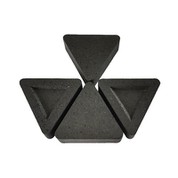
Pure Charcoal Briquettes
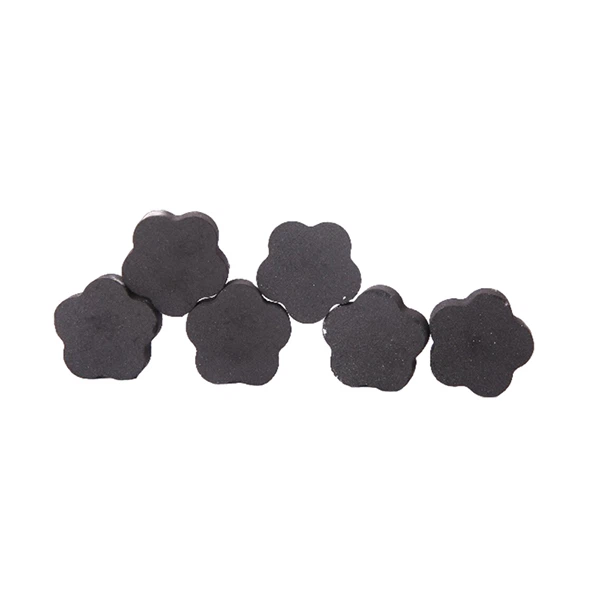
Charcoal briquettes have a pillow shape and are a composite fuel. They combine coal dust, accelerants, charcoal fines, binders and an oxidising agent. The binder makes sure the briquettes stay in their unique shape (it is usually a food-grade starch), and it also makes sure the briquette doesn't crumble. The oxidising agent ensures the briquette is easy to light. The rest is generally coal or charcoal fines that are carbonised hardwood. Some briquettes give off acrid-smelling smoke, so a chimney starter is recommended.

- Product Introduction
Puyang Hongyuan New Energy Technology Co., Ltd
Puyang Hongyuan is located in Puyang City, Henan Province, the origin of the first dragon in China, with a total area of 43,000 square meters, a total construction area of 21,000 square meters, and an annual output of more than 10,000 tons. We have introduced advanced equipment and facilities, implemented multi-dimensional quality control in all aspects of production, and carried out quality inspection and testing by grading and classification, and implemented the production policy of quality first and perfect details.
Why Choose Us
Our Product
We are specialized in various types of hookah charcoal, incense charcoal, barbecue charcoal, Instant-light charcoal and research and development of new product.
Production Market
Our cooperative customers are located in more than 60 countries and regions in Asia, Europe, Australia, North and South America, and Africa. As a leading enterprise in the industry, it has participated in the strategy of the World Halal Industry Forum, the United Arab Emirates Exhibition and the Canton Fair, the Yiwu Fair held in China, and other large-scale international exhibitions and exhibitions, and has been well received by domestic and foreign customers.
Certifications
Our company has strong technical force, professional talent team, high-quality management team, and has obtained nearly 20 patents, and has passed ISO9001 international quality system certification. Since its establishment, the company has been rated as a high-tech enterprise by the provincial government, and will continue to apply for specialized, special, and new-type enterprises, and move forward gradually for further development.
In modern day markets, quality has become a major economic factor. Customers not only require a fast and efficient delivery of data, but also 100% accuracy of the data provided.

Function: Burning
Logo: Support customization
Custom Size: Support customization

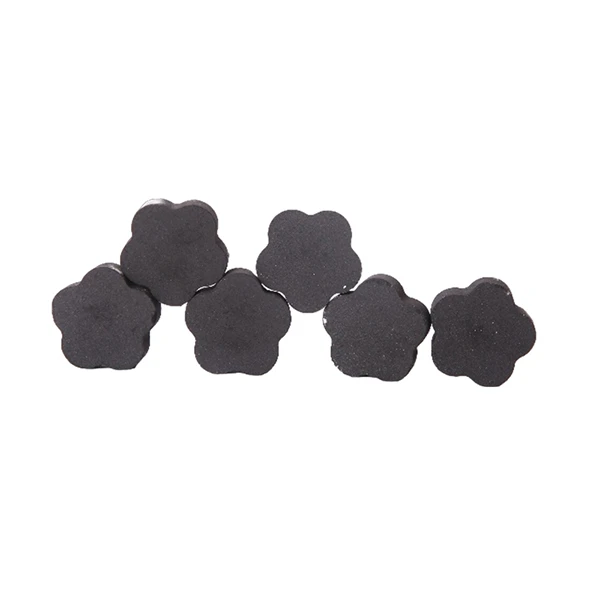
Square charcoal is made from coconut shell. It is used for shisha/hookah/arguile smoking. There are some shapes and sizes.
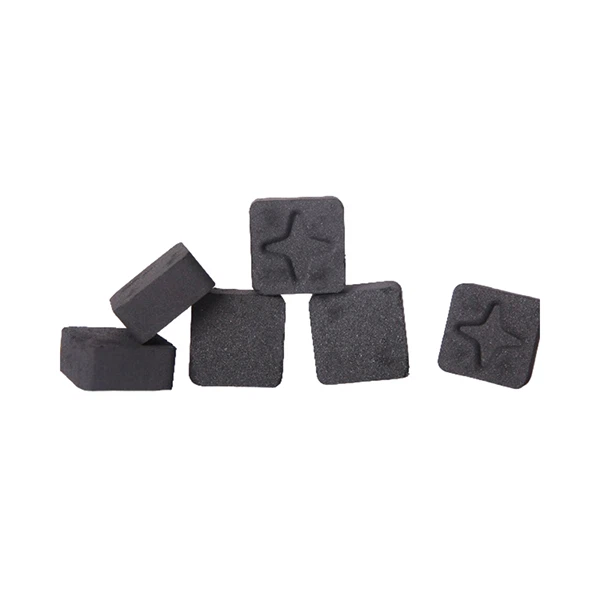
Any types of agroforestry waster and forest waste can be used for make briquettes, such as maize talks, soybean stalks,broomcorn stalks, cotton talks, rape stalks, peanut plants, sunflower stalks, bamboo sawdust.

Specification For barbecue coal brick
High heating value
Smokeless
Energy saving and environmental protection
Low ash content
Raw material: Orange Wood
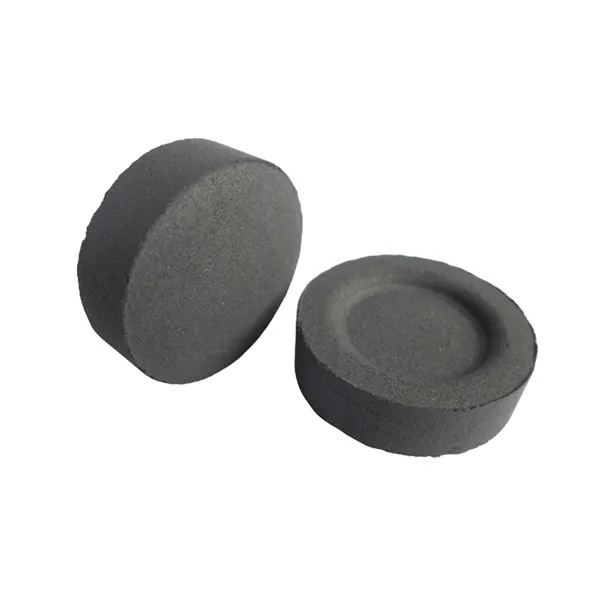
Item: Value
Place of Origin: China
Brand Name: Best charcoal barbecue
Model Number: Barbecue charcoal
Material: COCONUT SHELL

Pure natural, no chemical, no toxic gases, no toxic residue, eco -friendly, long burning, clear burning, low white ash, tasteless, smokeless, no smell, no odor.

Machine-made Charcoal
High Quality Sawdust Briquette Charcoal
100% Sawdust as raw material. No chemical content.
Highly Carbonized Charcoal
Long burning duration time with strong heat

Bamboo charcoal made from natural bamboo sawdust, the stick and square shape formed under high pressure, no additive or binding agent need during production.
What is Pure Charcoal Briquettes
Charcoal briquettes have a pillow shape and are a composite fuel. They combine coal dust, accelerants, charcoal fines, binders and an oxidising agent. The binder makes sure the briquettes stay in their unique shape (it is usually a food-grade starch), and it also makes sure the briquette doesn't crumble. The oxidising agent ensures the briquette is easy to light. The rest is generally coal or charcoal fines that are carbonised hardwood. Some briquettes give off acrid-smelling smoke, so a chimney starter is recommended.
Advantages of Pure Charcoal Briquettes
More efficient and durable
One of the advantages of charcoal briquettes is their higher and more stable combustion power than regular charcoal. Charcoal briquettes can burn faster and longer, so you don't need to replace or add fuel too often. In addition, charcoal briquettes are also more economical because you only need to use a small amount to generate enough heat. That way, you can save on costs and energy.
More environmentally friendly
Charcoal briquettes are an environmentally friendly fuel because they are made from natural, renewable materials. Charcoal briquettes do not produce smoke that is harmful to health and the environment, as they do not contain chemicals or additives. Charcoal briquettes also do not leave a lot of ash and are difficult to clean, because they have a low water content. By using charcoal briquettes, you can contribute to reducing carbon emissions and preserving the forest.
Charcoal briquettes produce more delicious flavors
Charcoal briquettes have another very important advantage for foodies, which is their ability to produce delicious and aromatic flavors. Charcoal briquettes can give a distinctive and natural flavor to the food you cook or grill, as they contain elements of wood and coconut shells that can give a rich aroma. Charcoal briquettes can also maintain the moisture and freshness of food, because it does not make food dry or burn. With charcoal briquettes, you can enjoy tastier and healthier food.
Charcoal briquettes are easier to obtain and store
Charcoal briquettes are a fuel that is easy to obtain and store, as they are available in many places and have a practical shape. You can buy charcoal briquettes in shops, markets, or online at an affordable price. Charcoal briquettes also have a uniform and compact shape, making them easy to organize and store. You don't have to worry about charcoal briquettes getting wet or moldy, as they have good durability. Charcoal briquettes also do not require a large or special storage area, as they are not flammable or explosive.
Charcoal is created by burning wood without any oxygen. Lump charcoal is the product of the process in its purest form-pieces of wood burned into carbon.
Charcoal briquettes are manufactured by machines that press the material together. Unlike the pure hardwood lump charcoal, the briquettes contain several additives that help them light and burn consistently.
Cooking Hot and Fast
Lump charcoal burns quicker and at higher temperatures than briquettes. That means you can cook hot and fast but use less charcoal with lump. This is great for searing things such as steaks and pork chops.
Burn Time
There's of course a trade off with lump charcoal burning hotter and faster. While you'll get cooking faster at higher temps, the fire won't last as long as briquettes. This of course varies based on whether you're grilling with an open top, closed top or in a which retains heat better.
Temperature Control
You can extend burn times of course by restricting airflow. This will help lower the temperature, extend burn time and maintani a more consistent heat. This is done through the dampers on your grill or smoker.
Briquettes take longer to respond to airflow changes versus lump charcoal which quickly adapts to changes in airflow.
Charcoal: Ash in Lump vs. Briquette
One of the best parts of lump charcoal is that it's much easier when you're done after a day of grilling. It produces very little ashes and thus leaves little to clean up. Briquettes on the other hand, tend to produce a high amount of ash which not only creates more work afterwards, but also tends to easily blow up and dust your food, clothes.
At the end of the day, the difference between lump and briquette charcoal is straightforward and may not make a big difference to casual grillers. Lump charcoal is great for hotter and faster grilling, not to mention ceramic grills. Briquettes are good all round options for casual backyard grilling and will produce more stable heat over a longer time which may be worth the extra ash and preheat time.
Composition of Charcoal Briquettes


The charcoal briquette is mainly composed of two parts, the charcoal which is used to provide heat and the minor ingredients. Charcoal is the product of incomplete combustion of wood or wood raw materials or pyrolysis under the condition of air isolation.
Its main component is carbon, so it can be used as fuel. The minor ingredients include accelerants, white ash, and briquette binder.
Component 1: Charcoal
Charcoal accounts for more than 70% of the entire charcoal briquettes. As the combustion material providing heat, the raw materials for charcoal can be various woods, such as beech, birch, hard maple, pecan, and oak.
The charcoal is mainly processed by the kiln. In general, the charcoal produced and extinguished in the kiln is called black wood charcoal. It has the advantage of being easy to ignite, but it is easy to explode during burning with a short burning time and much smoke.
While the white wood charcoal can be oxidized and generate white ash after being carbonized, removed from the kiln and quenched with wet sand. Compared with black wood charcoal, it has a harder texture.
Component 2: Accelerants
The charcoal briquette cannot fully into contact with oxygen during the combustion process, so the accelerator is needed to accelerate the combustion. The most suitable accelerator is the nitrate, which can not only provide oxygen to accelerate combustion but also heat during combustion.
However, it is too expensive. As an excellent accelerator with lower cost, 10% -20% of sawdust can be added to effectively increase the burning speed.
Component 3: White ash
As one of the minor ingredients, white ash accounts for only 2% -3% of the charcoal briquette. But it plays a very important role in the burning process of charcoal briquettes.
By observing the degree of turning white, we can judge the burning degree of the charcoal briquette. In addition, because the white ash is not combustible, it can effectively extend the burning time.
Component 4: Briquette binder
Due to the lack of plasticity, the binder needs to be added in the process of charcoal briquettes. The proportion of binder in the charcoal briquettes is about 5% - 7%.
Numerous facts show that starch has the best performance as a binding material. After it's gelatinized, a thick paste can be formed so that the charcoal powder is stuck together to facilitate the later briquette.
Another popular briquette binder is Arabic gum or acacia gum.
The Production Process of Pure Charcoal Briquettes
Charcoal fines have a much lower purity than lump charcoal. The fines contain, in addition to charcoal, fragments, mineral sand and clay picked up from the earth and the surface of the fuelwood and its bark. The fine powdered charcoal produced from bark, twigs and leaves has a higher ash content than normal wood charcoal. Most of this undesired high ash material can be separated by screening the fines and rejecting undersize material passing, say, a 2 to 4 mm screen. This fine material may still contain more than 50% charcoal depending on the level of contamination but, nevertheless, it is difficult to find uses for it. Material retained on the screen will be mostly fragments of good charcoal and, after hammer-milling is suitable for briquetting. But if fines could be fully used, overall charcoal production would rise by 10 to 20%. Briquetting - turning fines into lumps of charcoal - seems an obvious answer.
Briquetting requires a binder to be mixed with the charcoal fines, a press to form the mixture into a cake or briquette which is then passed through a drying oven to cure or set it by drying out the water so that the briquette is strong enough to be used in the same burning apparatus as normal lump charcoal.
Charcoal is a material totally lacking plasticity and hence needs addition of a sticking or agglomerating material to enable a briquette to be formed. The binder should preferably be combustible, though a non-combustible binder effective at low concentrations can be suitable. Starch is preferred as a binder though it is usually expensive. Highly plastic clays are suitable providing not more than about 15% is used. Tar and pitch from coal distillation or from charcoal retorts have been used for special purpose briquettes but they must be carbonised again before use to form a properly bonded briquette. They are of good quality but costly to produce.
The press for briquetting must be well designed, strongly built and capable of agglomerating the mixture of charcoal and binder sufficiently for it to be handled through the curing or drying process. The output of briquettes must justify the capital and running costs of the machine. Briquetting machines for charcoal are usually costly precision machines capable of a high output. Brick making presses have been used but there do not appear to be any commercially effective, really low cost machines for this purpose. Charcoal is quite abrasive so that equipment for screening fines, grinding, mixing them with binder, Briquetting and so on must be abrasive-resistant and well designed.
It is possible to add material to aid combustion of briquettes such as waxes, sodium nitrate, and so on, during manufacture to give a more acceptable product. Also clay as a binder, silica, and so on, can be mixed with the fines to reduce the cost of the briquette. This, of course, lowers the calorific value and is merely a form of adulteration for which the user pays, though claims may be made that burning is improved. But well made briquettes are an acceptable, convenient product. The virtual absence of fines and dust and their uniformity are attractive for barbecue purposes.
What are Different Types of Pure Charcoal Briquettes
Charcoal is used as a type of fuel, most commonly to fuel grills for cooking. There are several different types of charcoal a grill chef can choose from, with the most common types being briquette, lump, and extruded.
Among the briquette variety, there are several different types of charcoal. Generally, the briquette is made from a combination of charcoal, mineral carbon, brown coal, borax, sodium nitrate, sawdust, limestone, and starch.
Each of these ingredients has its own special properties to contribute to the charcoal briquette. The charcoal, along with the mineral carbon and the brown coal, serves as a heat source. The borax is a press release agent, while the starch is a binder. The sodium nitrate and the sawdust both assist with ignition, and the starch is a binder.
Other different types of charcoal briquettes may be marketed as "natural." In this case, they may only contain charcoal and starch. Still other different types of charcoal briquettes contain additional ingredients, such as lighter fluid or paraffin, in order to make them easier to light. The addition of these ingredients does not create a health hazard in these different types of charcoal, because the fuel is burned off before it can contaminate the food.
There are also other different types of charcoal that contain ingredients meant to help add flavor to the food, such as mesquite. These ingredients are part of the charcoal and, therefore, do not burn off like the lighter fluid. The smoke that results from burning these different types of charcoal contains the flavor, which is added to the food during cooking.
Lump charcoal is one of the other different types of charcoal. This charcoal is created solely from hardwood and, as a result, burns hotter than other types. Since lump charcoal burns at such a high temperature, it creates less ash than briquette charcoal.
Extruded charcoal is created through a process called extrusion, which is a highly pressurized process that pushes materials through a preset mold. In this case, the material is either carbonized wood or raw ground wood. Through the extrusion process, these different types of charcoal are made into log shapes.
Application of Pure Charcoal Briquettes
In industrial field
Charcoal briquettes are applied in purifying industrial drinking water production, power plant boiler water purification, air purification, automobile exhaust recycling, precious metal refining and used as light catalysis carrier.
• Metallurgy: Charcoal briquettes can be used as reductant for steel making and iron making, as ingot thermal insulating agent or as electrode for aluminium metallurgy.
• Chemical industry: Used to produce carbon disulfide, calcium carbide, carbon tetrachloride, etc.
Charcoal briquettes are also used in charcoal ink factory, activated carbon factory, steel factory, copper plant, mosquito plant, rubber factory, thermal insulation materials plant, etc.
In agricultural field
• To improve ground temperature: If the soil is applied charcoal powder, the black charcoal powder will absorb solar thermal power (heat), as a result soil temperature is increased, which can promote seed sprout and improve germination rate.
Improve soil quality, keep soil moisture.
• Used as relievers for pesticides and fertilizers: Alter soil power of hydrogen, increase soil CO2 content, absorb poisonous metal elements in soil, and improve microbial activity.
In food production
Charcoal is used as food additives, food brewing, tea frying or baking; used as decoloration and purification of sucrose, glucose, xylose, ribose, caramel, lactose, etc.; food preservation, large freezer, refrigerator deodorant, etc.
In medicine making
Charcoal briquettes can be used for decolorization, purification and refining of chemical reagent, biological pharmaceutical raw materials or pyrogen remover for injections.
In animal husbandry
Used as feed admixture can accelerate livestock and poultry growth, also enhance their disease resistance. Charcoal briquettes can also deodorize for corrals.
FAQ
Hot Tags: pure charcoal briquettes, China pure charcoal briquettes manufacturers, suppliers, factory, hardwood barbecue charcoal, barbecue charcoal for foodie, barbecue charcoal for garage grill, cheap barbecue charcoal, uniform size barbecue charcoal, fast igniting barbecue charcoal